Harding+ has set out a next-generation blueprint for success, the company announced in a press release.
According to the statement, the strategy is driven by insights gained from its Miami, UK and Sydney operations and focuses on three “defining forces”: Emotion, Evidence and Experimentation.
“The future of cruise retail isn’t just about product or technology; it’s about people,” said Harding+ CEO Chris Matthews.
Harding+ noted that, as cruise retail enters a new era, stores onboard are no longer places to transact but spaces “designed to shape the guest experience emotionally.”
The company added that the shift is not theoretical but rooted in commercial benefits for all, reflecting the same evolution already underway across the wider retail world, which sees clients valuing experience over transaction.
Onboard, the dynamic is amplified, with guests removed from routine and more receptive to storytelling authentic to individual ships and their destinations, the retailer continued.
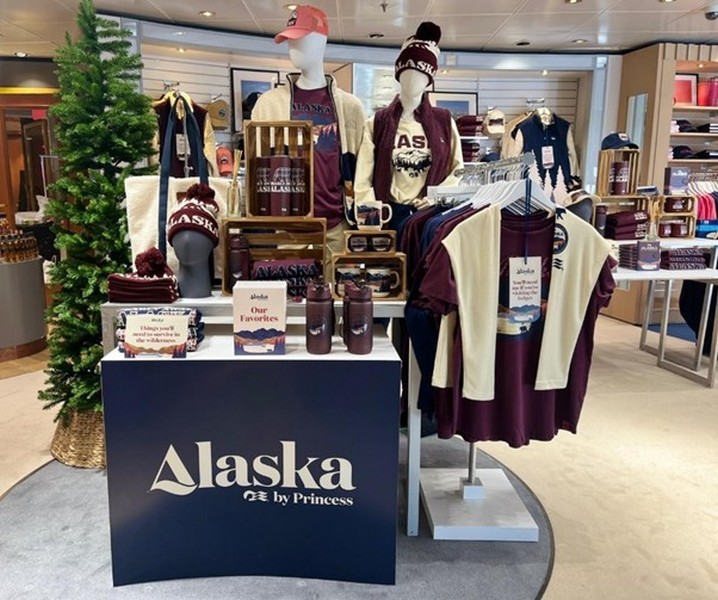
“For cruise lines, this creates both a responsibility and an increased revenue opportunity. Retail can become an increasingly meaningful part of every voyage, supporting guest satisfaction and building loyalty while unlocking stronger onboard commercial performance,” Harding+ added in a statement.
Underpinning the brand’s new blueprint is a reliance on people: guests are said to remember the staff member who noticed what they were celebrating or who explained the story behind a piece.
The company said that this factor is the result of a “consistent commitment to training, coaching, and support that shows up on every sailing.”
The “reality check” is made possible by investments in automation and simplification, which allow onboard teams to bring a personal approach to guest needs, Harding+ added.
“Our onboard teams are the guest experience. Consistently investing in their capabilities means when service is done well, it feels natural rather than transactional, and emotionally positive.”
Emotion
Harding+ said that its research shows that 92 percent of guests intend to shop at sea, while 87 percent say that onboard storytelling may influence purchasing.
Passengers also said that they visit the onboard stores an average of 3.5 times per voyage, which the company said reflects a different context compared to main street retail.
“Guests have time. They’re relaxed. They’re open to discovery. And so shopping becomes an active part of their holiday leisure time,” Harding+ said.
As such, the stores that perform best tend to be designed around that storytelling reality, the company added.
Harding+ now dedicates around 25 percent of all its retail space to experience-led moments, including tastings, masterclasses, capsule collections and curated storytelling.
“Experience doesn’t happen by accident. It’s built into store architecture, event cadence, and how teams are supported to deliver service that feels effortless. An ROI of over 100% is not uncommon for the brands we partner with on experiences, bringing ‘add-to-memory’ moments that can enhance a guest’s whole trip,” added Linzi Walker, chief commercial officer at Harding+.
“Experience-led zones will account for an increasingly significant share of onboard revenue, and we’ve built the model to make cruise lines the biggest winners of that shift in revenue and guest loyalty wins.”
Evidence
The company said that its evidence blueprint focuses on precision modeling and live insight, with demand measured voyage by voyage using AI-assisted analytics.
The software is said to anticipate needs before they arise, adjusting offers based on guest mix, itinerary, seasonality and behavioral cues.
The company said that the impact is tangible, with consistent 90 percent-plus stock availability supported by an upgraded supply chain and forecasting platform.
“It’s not just about forecasting demand; it’s about converting insight into experience in real time,” noted Mikos Taylor, chief technology officer at Harding+.
“It means we can land absolute precision in every aspect of retail, which for cruise line and brand partners is the ultimate commercial win differential,” he added.
An advancement for 2026 will be the rollout of dynamic shelf pricing, which Harding+ said enables “a new level of live responsiveness and range optimization.”
Experimentation
Focusing on experimentation and engaged feedback, Harding+ supported more than 2,000 new-to-sea products in 2025.
“It’s not a focus group, but (a cruise ship) is a focused community. Guests love to share feedback and stories in real time, which gives brands immediate insight to refine ideas before wider rollout. As such, the level of first-at-sea brands will grow significantly year on year,” said Harding+ Marketing Director Katie Floyd.
The company said that experimentation tends to improve performance, with best-performing brands often “treating the ship as a live environment” and focusing on learn, refine and relaunch.
“And because guest feedback is immediate, the iteration cycle is much faster (and considered) than on land,” Harding+ explained.
“Cruise retail is no longer a niche channel. It’s becoming a serious platform for guest experience, brand learning and loyalty building, and it’s moving quickly,” Walker added. “For cruise lines, the opportunity is to treat retail increasingly as part of the guest journey rather than separate from it. For brands, it’s a chance to work in an environment that rewards storytelling and responsiveness.”
“Because when retail is designed around emotion, powered by evidence, and supported by a culture of experimentation, all delivered by confident onboard teams, it doesn’t just drive sales. It becomes part of long-term guest recall and helps the industry that is chasing connection alongside conversion win big,” she said.