The New York City Economic Development Corporation (NYCEDC) has unveiled what it called an ambitious Master Plan for the redevelopment and modernization of the Manhattan Cruise Terminal (MCT).
By replacing aging infrastructure with new, expanded piers and a single terminal structure, the plan will enable MCT to accommodate the next generation of cruise vessels, serving up to two 8,000-passenger ships and one 6,000-passenger ship simultaneously.
This will all be delivered with sustainable infrastructure that includes much needed quality-of-life improvements for residents and visitors to the west side of Manhattan, the agency said.
Following a 12-month community engagement process, the Manhattan Cruise Terminal Master Plan addresses critical infrastructure challenges, including the replacement of 90-year-old piers and facilities, increases public access and wo;; introduce a fully electrified port with shore power infrastructure and integration with the surrounding Hudson River Park and neighboring community.
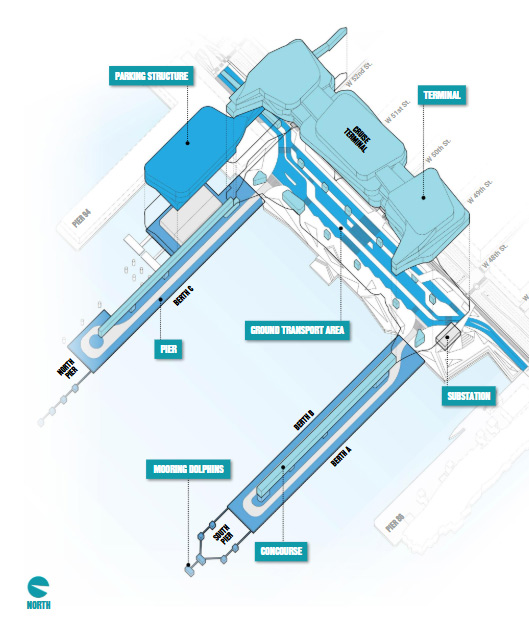
These upgrades will accommodate current and future cruise ships while significantly reducing emissions and enhancing local air quality. Across the Manhattan and Brooklyn Cruise Terminals, the cruise industry welcomed upwards of 1.5 million passengers to New York City in 2024.
“The Manhattan Cruise Terminal Master Plan is a bold, forward-looking vision that will redefine the future of cruising in New York City,” said NYCEDC President & CEO Andrew Kimball. “By modernizing and electrifying the terminal, this plan will meet urgent industry demands, grow economic impact and tax revenue for the City, and deliver on the community’s longstanding goals for a safer, more sustainable terminal with public access to the waterfront.”
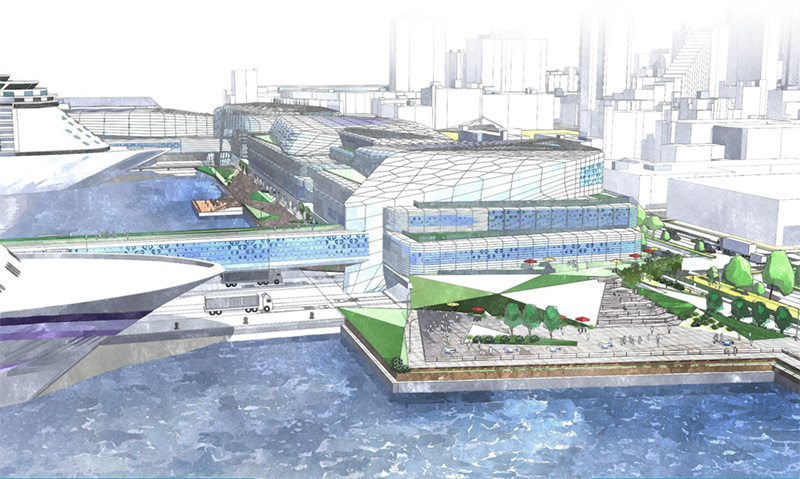
The Master Plan includes an initial commitment of $20 million for shore power at MCT. Harbor vessels including tugs will now be able to connect to shore power to allow them to recharge their batteries and allow the tug fleet to begin the conversion to Hybrid and fully electric propulsion through the use of on-board battery storage.
Beyond cruise operations, the agency said the MCT will serve as a dynamic multimodal hub for transit and freight delivery. A new Blue Highways landing will support sustainable marine freight distribution, reducing overall city truck traffic and supporting zero-emission last-mile delivery. The plan also integrates a ferry stop for potential Hudson River service, expanding access for passengers and reinforcing the terminal’s role as a regional mobility center.